
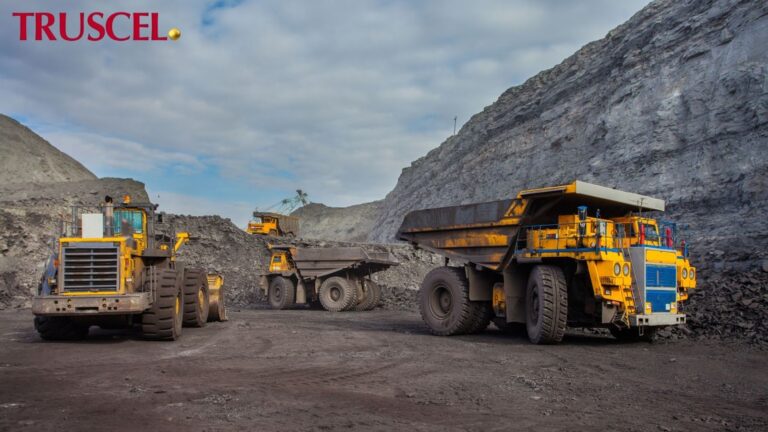
Indonesia’s coal industry is undergoing change, driven by energy transition policies and tighter regulation across its 500 million-ton export market as the world’s top thermal coal exporter. Executive teams face pressure to rethink financial strategies and maintain investor confidence amidst these shifting market forces. Coal company valuation refers to the process of estimating the economic value of a mining business based on its reserves, projected cash flows, and regulatory environment.
Market volatility and the global energy transition are reshaping key assumptions used in financial models. These shifts introduce long-term risks that directly affect capital allocation and valuation outcomes. Global consultants like McKinsey & Company (Energy Transition Report, 2023) report that these transition pressures significantly alter long-term strategies for mining firms.
Strategic decision-making demands an objective assessment of a firm’s financial standing in a highly competitive landscape. C-level executives cannot rely on outdated book values when negotiating high-stakes contracts or attracting foreign direct investment. Mining firms typically leverage comprehensive financial modeling to justify equity pricing to external auditors and regulatory bodies.
Quantifying Regulatory Impacts and Data Insights
Recent government policies directly reshape cash flow projections for mining operations across the archipelago. Under PP No. 8/2025, exporters must retain 100% of Natural Resources Export Proceeds (DHE) domestically for 12 months. This mandate reduces short-term liquidity and increases working capital requirements in valuation models.
The impending Carbon Tax of Rp 30/kg CO2e adds a measurable operational cost that management accounts for in all future forecasts. Regulatory compliance dictates the boundaries of financial planning and asset life projections under Kepmen ESDM No. 41/2023, which governs the Coal Benchmark Price (HBA). Fluctuations in HBA directly impact revenue projections and introduce volatility into long-term valuation models.
Reserved data establishes the primary constraint on future earning potential for any mining operation. Relying on recognized JORC and KCMI standards ensures that reserve estimates realistically support the projected Life of Mine. Verified reserve data remains a core valuation driver when projecting revenue streams through the concession period up to the year 2040.
Discounted Cash Flow in Mining Equity Analysis
Given these regulatory constraints and finite reserves, analysts focus heavily on forward-looking cash flow modeling. Standard asset-based approaches fall short when assessing mining equity because they ignore the timeline of future commodity sales. Income-based valuation methodologies provide a realistic picture of a firm’s financial health by capturing expected cash generation over the mine’s lifespan.
Unlike manufacturing businesses, mining assets deplete over time, making the sustainability of future revenues the priority for financial appraisals. Analysts determine equity value by discounting projected free cash flows using the Weighted Average Cost of Capital (WACC), then subtracting interest-bearing debt. This approach isolates the specific risk profile and true economic worth of Indonesian mining assets.
Setting the right discount rate is non-negotiable for an accurate appraisal of corporate stock. Baseline macro assumptions (subject to market changes) include a Corporate Tax rate of 22% and a Risk-Free Rate of ~5.23% based on Indonesian government bond yields. In emerging markets, additional risk factors—such as country default risk—are incorporated into the Equity Risk Premium (~8.78%).
Analysts also factor in a Cost of Debt around 8.59% and a Beta of 0.24, derived from recent industry benchmarks. Adjusting for liquidity and control ultimately determines the final stock price presented to stakeholders. Applying a Discount for Lack of Marketability (DLOM) and a Discount for Lack of Control (DLOC) is a core valuation factor during complex corporate restructuring or divestment negotiations.
Aligning Financial Appraisals with Corporate Strategy
Accurate stock appraisals directly support urgent corporate mandates and strategic business transactions. Compliance with the Minerba Divestment requirements under Permen ESDM No. 9/2017 demands defensible equity pricing to satisfy state and private stakeholders. Verified financial figures support Work Plan and Budget (RKAB) approvals and secure operational extensions under UU No. 4/2009 and PP No. 96/2021.
Mergers and acquisitions in the mining sector rely heavily on these rigorous financial models to close deals. Buyers and sellers agree on projections that account for the latest coal valuation trend and anticipated regulatory shifts. A well-executed DCF model protects shareholders and facilitates smoother negotiations during joint venture formations.
From a valuation perspective, mining share valuation requires not only technical accuracy in financial modeling but also the ability to reconcile valuation outputs with regulatory expectations and transaction dynamics. This becomes particularly critical in scenarios involving divestment, restructuring, or strategic investment decisions, where valuation outcomes must withstand scrutiny from multiple stakeholders.
Truscel Capital supports these processes by ensuring that valuation assumptions, discount rates, and applied adjustments remain consistent, supportable, and aligned with prevailing market practices.
Key Components of Mining Stock Valuation
A structured financial model typically includes the following components:
- Analyze JORC or KCMI-compliant reserves to define production life.
- Project operating cash flows using HBA forecasts and tax assumptions.
- Determine WACC using market-based inputs.
- Adjust enterprise value by subtracting debt.
- Apply DLOM or DLOC depending on ownership structure.
Securing Your Strategic Advantage
Given the complexity of these financial inputs, mining firms regularly rely on independent advisors to navigate regulatory constraints. For deeper insights into coal company valuation, additional resources such as industry vodcasts and expert newsletters can provide further guidance. Platforms like Truscel Capital offer data-driven appraisals that protect business interests during corporate transactions, which you can explore here: https://truscel.com/vodcast/.