
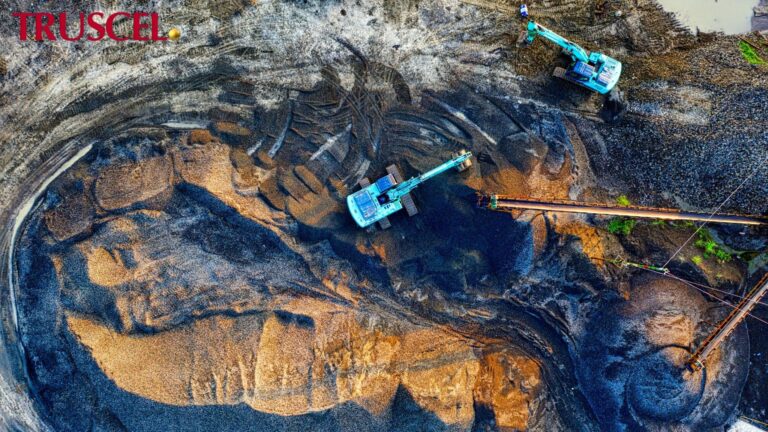
Navigating the complex landscape of mineral and coal extraction requires you to strictly adhere to the evolving minerba divestment regulation. Current energy transition policies and intense price fluctuations in the global coal market create significant operational pressures for C-Level executives and mine owners. Foreign investors face a mandated transition pathway where majority ownership must eventually shift to local entities to maintain active production licenses.
What is Minerba Regulation?
The core legal framework governing this transition stems from UU No. 4/2009 and its subsequent amendments under PP No. 96/2021. These rules establish clear boundaries for foreign entities holding a Mining Business License (IUP), requiring a phased reduction of foreign ownership. This mandate forms the backbone of the Indonesia mining sector reform, aiming to balance foreign capital injection with domestic resource sovereignty.
Under Permen ESDM No. 9/2017, foreign mining companies must systematically transfer 51% of their shares to designated national stakeholders. The Ministry sets strict pricing benchmarks, relying heavily on Kepmen ESDM No. 41/2023 for Coal Benchmark Price (HBA) reference points during the assessment. This structured divestment on mining shares in Indonesia heavily influences your long-term capital allocation and corporate restructuring strategies.
Failure to meet these regulatory timelines jeopardizes your RKAB (Work Plan and Budget) approval and risks immediate IUP suspension. You must proactively manage your compliance obligations to ensure uninterrupted mine operations and maintain investor confidence. Regulatory adherence acts as a baseline requirement for any future M&A activities within the Indonesian jurisdiction.
The Mechanics of Foreign Share Release
Executing this share transfer involves a defined sequence of obligations spanning several years of commercial production. You must evaluate your corporate structure continuously and prepare for strict regulatory oversight from government auditors. The Ministry of Energy and Mineral Resources (ESDM) outlines specific procedures to ensure fair market practices during the transaction.
- Year Five Threshold: Foreign investors must begin the mandated transfer process after five years of commercial production by offering an initial percentage of shares.
- Progressive Scaling: The required local ownership percentage increases annually over a ten-year schedule until reaching the target 51%.
- Offer Hierarchy: You must offer shares sequentially to the Central Government, Regional Government, State-Owned Enterprises (BUMN), Regional-Owned Enterprises (BUMD), and finally National Private Business Entities.
Valuation Approaches for Mining Divestment
Determining the fair market value of your equity is the most sensitive phase of this regulatory compliance process. Rather than simply assessing underlying physical assets, you must calculate the enterprise value based on future economic benefits. Truscel Capital exclusively conducts stock valuation using the Discounted Cash Flow (DCF) method to accurately capture your net operational cash flows.
Your equity value equals the net cash flow discounted by the Weighted Average Cost of Capital (WACC), minus any interest-bearing debt. We then adjust this final figure using Discounts for Lack of Control (DLOC), Discounts for Lack of Marketability (DLOM), and applicable control premiums. As noted by valuation expert Shannon P. Pratt, properly applying DLOC and DLOM in M&A scenarios provides a defensible basis for establishing fair equity transaction values.
Discounted Cash Flow and Macro Assumptions
Accurate DCF models rely on hard macro data to determine the appropriate discount rate for your specific mine. Current market assumptions mandate integrating a Corporate Tax rate of 22% under UU 7/2021, alongside a Risk-Free Rate of 5.23%. You must also factor in a Cost of Debt of 8.59% to accurately reflect the financing environment for resource extraction companies.
Evaluating the cost of equity requires exact market risk assessments tailored to the Indonesian economic landscape. You must incorporate an Equity Risk Premium of 8.78% and a Beta of 0.24 to reflect the specific market volatility of the mining sector. Renowned finance academic Aswath Damodaran emphasizes that capturing appropriate Country Default Spreads and Equity Risk Premiums validates the cost of capital in emerging markets.
Reserves, Cash Flow Projections, and Specific Risks
Your projection period must align strictly with the reserve life defined in your IUP, potentially extending up to 2040. International JORC or KCMI reporting standards dictate that your proven and probable reserves set the absolute limit for the Life of Mine in financial models. Consequently, your cash flow generation capacity remains directly tethered to verifiable geological data rather than speculative exploration targets.
Beyond baseline production metrics, your valuation model must quantify emerging regulatory and environmental liabilities. You must simultaneously account for specific industry risks, including the Energy Transition framework that imposes a Carbon Tax of Rp 30/kg CO2e on operations. Furthermore, export regulations under PP No. 8/2025 require 100% of Natural Resources Export Proceeds (DHE) to be retained domestically for 12 months, directly impacting your liquidity profile.
Truscel Capital’s Role in Your Divestment Strategy
Executing a mandated equity transfer requires independent, objective financial advisory to protect your shareholder value during negotiations. Truscel Capital provides comprehensive stock valuation services tailored specifically for C-Level executives navigating these complex compliance requirements. We ensure your financial models withstand government scrutiny while optimizing your strategic position under the minerba divestment regulation.