
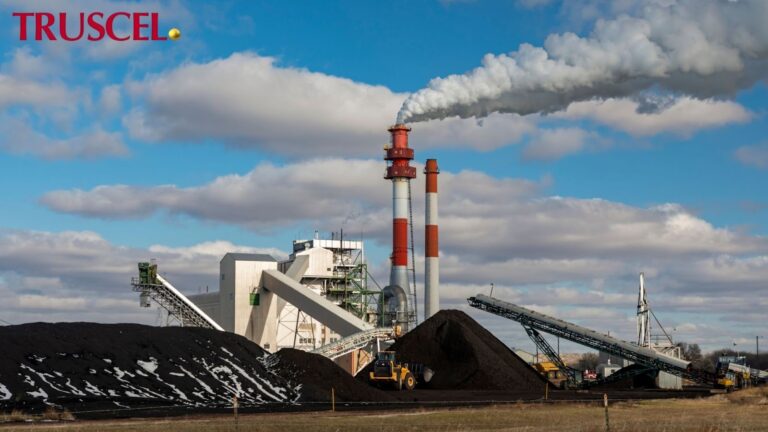
The Indonesian commodity sector faces heightened regulatory scrutiny alongside aggressive energy transition mandates. Fair market value represents the estimated price at which an asset changes hands between a willing buyer and a willing seller, neither being under any compulsion to act and both having reasonable knowledge of relevant facts. Understanding this exact definition is legally required when executing a mandatory mining divestment in Indonesia.
Mandatory Equity Transfers
Government regulations dictate strict ownership timelines for foreign entities operating within the domestic extraction industry. Under MEMR Regulation 43/2018 and GR 96/2021, foreign-owned production operations must progressively transfer 51% of their shares to Indonesian entities by their tenth year of production. This staged ownership transfer typically prioritizes the Central Government, followed by regional governments, state-owned enterprises, and finally private domestic firms.
Establishing this transaction price requires an objective Discounted Cash Flow (DCF) methodology rather than relying on a simple historical asset approach. The DCF model calculates the intrinsic value of your mining operation based on its future cash-generating potential. Government regulators and potential buyers then use this intrinsic value as the baseline to negotiate the final fair market value for the equity transfer.
The Mechanics of DCF Valuation
Evaluating the enterprise requires projecting the Free Cash Flow (FCF) over the verified life of the mine. You can calculate your baseline FCF using this explicit structure:

This calculation isolates the actual cash available to investors before factoring in the costs of financing the operation.
You then discount these projected cash flows to their present value using the Weighted Average Cost of Capital (WACC). You can determine this overall discount rate using the following equation:

Building a defensible WACC involves setting accurate baselines for your equity Ke and debt Kd costs using current market data.
Aswath Damodaran’s valuation methodology emphasizes that properly adjusting equity risk premiums reflects the realities of operating in emerging markets like Indonesia. Your financial models must also incorporate a terminal value to account for the residual worth of the asset at the end of the projection period, though finite geological reserves heavily constrain this figure for mining.
The terminal value represents the present value of all expected cash flows generated beyond your explicit forecast period. Your internal models must account for several specific variables to ensure accuracy during government reviews:
- Discount Rates: Source current yields for Risk-Free Rates and calculate Equity Risk Premiums based on actual market returns to avoid relying on static historical assumptions.
- Operating Costs: Factor in the 22% corporate tax rate T and the upcoming carbon tax of Rp 30/kg CO2e directly into your cash flow margins.
- Liquidity Constraints: Account for PP No. 8/2025, which requires 100% of Natural Resource Export Proceeds (DHE) to be retained domestically for 12 months.
Business Relevance and Compliance
FCF projections must strictly adhere to the actual lifespan of your geological assets. Aligning your baseline extraction profile with JORC or KCMI standards validates the projected Life of Mine and ensures your calculations end exactly when reserves run out. Regulators scrutinize these details heavily during annual Work Plan and Budget (RKAB) submissions to verify your operational roadmap and financial capacity.
In the context of mandatory mining divestment, the robustness of a valuation model becomes a critical factor in bridging the expectations between regulators, sellers, and potential domestic buyers. A well-structured DCF framework not only supports compliance with regulatory requirements but also serves as a defensible basis during negotiation and transaction execution.
Truscel Capital has been involved in assisting such valuation processes by ensuring that key assumptions, discount rates, and projection methodologies are aligned with prevailing regulatory frameworks and market conditions.
Securing Your Strategic Position
Securing an accurate valuation protects your capital while fulfilling strict government ownership requirements. Partnering with specialized advisory firms provides the independent verification needed to navigate a complex mining divestment smoothly. For more actionable insights, learn more about valuation by watching our Vodcast and downloading Truscel Capital’s exclusive Newsletter here: https://truscel.com/vodcast/